|
|
Posted By Columbus Medical Association - CMA,
Tuesday, July 15, 2025
|

By The Institute at MagMutual®
A malpractice claim can be sudden, disorienting and deeply personal. For many physicians, it’s not just the legal implications that cause stress, it’s the emotional fallout — the anxiety, shame and sense that their professional reputation and identity are on the line.
These feelings are incredibly common. Most if not all physicians experience emotional distress at some point during the litigation process. Some develop physical symptoms like headaches or fatigue. Others withdraw from their social lives or begin questioning whether they should continue practicing at all.
These Responses Are Valid — And Manageable
Just because you find yourself facing a lawsuit doesn’t mean that the rest of your life stops, and certainly not your medical practice. As with any sudden adversity, you need to keep moving. Part of that involves making small but intentional choices to support your well-being. Prioritize basic self-care: get enough rest, stay physically active and eat well. Avoid self-isolation, even when you feel like shutting down. Carve out time for things that restore you, whether that’s family dinners, a hobby or simply stepping outside for a walk.
You might also benefit from speaking with someone who can help you process your emotions — a therapist, a trusted friend or a peer who has also been through a lawsuit. While legal rules may prevent you from discussing the details of the case, your personal response is not off-limits. In fact, verbalizing it may be the most effective way to ease its grip.
Finally, give yourself grace. Medicine is a profession filled with complexity, and sometimes, despite our best efforts, things go wrong. That doesn’t make you less skilled or less dedicated. Learning to separate your identity from a legal process can be one of the most powerful ways to keep going.
MagMutual Can Help You Move Forward
For physicians going through this difficult process, MagMutual offers support designed with the emotional demands of litigation in mind. From our Peer2Peer physician network to concierge trial assistance and mental health resources, we’re here to ensure you have the tools—and the human connection — you need to weather the storm and come through stronger. Learn more about the range of services available to MagMutual policyholders who experience unanticipated outcomes.
Take the Next Step Toward Optimal Outcomes
Disclaimer: The information provided in this article does not constitute legal, medical or any other professional advice. No attorney-client relationship is created and you should not act or refrain from acting on the basis of any content included in this article without seeking legal or other professional advice.
Tags:
MagMutual
Partner Story
Permalink
| Comments (0)
|
|
|
Posted By Columbus Medical Association - CMA,
Tuesday, July 15, 2025
|

The Ohio Bureau of Workers’ Compensation (BWC) provides workers’ compensation coverage based on estimated payroll. Therefore, at the end of the policy year, BWC asks employers to report their actual payroll for the prior policy year and pay any shortage (or receive a refund for any overage) in premium. This process is called a true-up. If the true-up is not completed timely, the following may occur:
- Employer will not be eligible for prior year rebates and incentives
- Employer will be removed from current year programs
- Employer will become ineligible for programs the following year and will continue to remain ineligible for all future years until all past true-ups are completed.
How to report payroll and complete the true-up
Although employers may contact BWC at (800) OHIO-BWC (800.644.6292) and complete their true-up report over the phone, BWC anticipates high call volumes and long wait times. They strongly encourage employers to complete their true-up report online through their BWC e-account at www.bwc.ohio.gov. If you do not have an e-account, simply select the Create E-Account Link to begin. You will need your BWC policy number and/or Federal Tax Identification Number.
Deadline: Private employers - True-up report must be completed and payment received no later than August 31, 2025.
Please note: There is no longer a grace period. True-up and payment (if owed) must be POSTED by the deadline date.
If you have any questions, contact our Sedgwick program manager, Dave Deyo, at david.deyo@sedgwick.com.
Tags:
Partner Story
Sedgwick
Permalink
| Comments (0)
|
|
|
Posted By Columbus Medical Association - CMA,
Friday, July 11, 2025
|
In today’s fast-paced work environment, many employees find themselves settling into routines that can often lead to complacency. Complacency can be defined as, doing the same task for so long without incident that you assume nothing will ever happen. While familiarity with tasks can create a sense of comfort, it can also pose significant risks, especially concerning workplace safety. It’s crucial to understand how complacency can lead to accidents and what can be done to mitigate these risks. Complacency can affect anyone at any age, regardless of their experience, so it is important to train all employees on how to spot complacency among themselves and other employees.
Let’s take an example of a person who performs a daily safety inspection before production starts. The purpose of the inspection is to identify any potential safety hazards. This daily routine occurs for months even years without incident. But, because “an incident has never occurred”, the employee decides to skip an inspection one day and no injuries resulted. So, the employee skips another one, then another, and soon inspections are rarely being conducted. Until something happens. Skipping important safety steps due to complacency could result in serious injury to the employee or fellow workers.
Usually, the best person to spot complacency is the employee themselves, but complacency can mean they don’t see the dangers right in front of them. To overcome this, teach employees to spot signs of complacency in their co-workers first. The more they learn how to recognize these signs in others, the easier it will be to recognize it in themselves.
Keep an eye out for the following situations that may indicate complacency is setting in:
- Dissatisfaction with work and/or lack of motivation
- Taking short cuts in work processes, safety procedures or inspections
- Increased frequency of near-misses or incidents
- Changes in attitude
- Noticeable increase or decrease in communication
- Tardiness for meetings or shifts
Increased employee engagement is a great way to help workers get out of the rut of complacency. Actions workers can take include:
- Consciously focusing on the task at hand.
- Identifying distractions when they come up and dismissing them.
- When conducting repetitive tasks, be on the lookout for procedural improvements that can help break up the monotony.
- Understanding the greater purpose of their job, such as the finished product or report, and interacting with team members regularly.
Identifying and addressing complacency is a team effort. Not only is it key for employees, but the employer can assist by implementing best practices such as:
- Share the Mission— Remind employees of the company’s purpose and goals so they maintain a connection to the larger missions and emphasize that their behaviors have an impact.
- Minimize Routines—Since repetition is related to complacency, consider job rotation or change up some of the work tasks to add variety to an employee’s job. Providing differing work tasks can help maintain focus and keep employees from falling into “cruise control” mode.
- Encourage observation of others - Have employees briefly stop work and observe the actions of others as they work. Observing others raises one’s own awareness, as well as the awareness of their co-workers.
- Correct poor performance - Mentoring programs and coaching can help employees identify and correct poor work practices and potential problems before an injury occurs.
- Conduct safety discussions and tool box talks – Make safety talks part of a daily routine and get employees involved and engaged with team members.
- Share Knowledge – Have employees identify and share the steps they perform to complete a job. Having another set of eyes or someone else’s ideas may help improve the process.
Complacency can be a dangerous thing, and everyone is susceptible. It can lead to underperformance, low job satisfaction, workplace accidents and low morale. But with a team effort and employee engagement, complacency doesn’t have to run the workplace.
If you would like to know more about Sedgwick’s safety services or would like to schedule a confidential consultation, please contact Andy Sawan at andrew.sawan@sedgwick.com or 330.819.4728.
Tags:
Partner Story
Sedgwick
Permalink
| Comments (0)
|
|
|
Posted By Columbus Medical Association - CMA,
Friday, July 11, 2025
|
There’s a new class of physician leaders in Central Ohio! On June 26, 2025, the Physicians Leadership Academy (PLA) celebrated 17 remarkable graduates at a ceremony and reception at the Columbus Medical Association. Leaders, instructors, alumni, and supporters gathered to honor the Class of 2025—each physician having spent the last nine months investing in deep reflection, connection, and personal growth.
From early-career professionals to those nearing retirement, these graduates embraced the opportunity to step outside the demands of traditional medical leadership and into a program designed to be truly transformational.
“I was apprehensive to get involved, especially with the time commitment, but I’m so grateful I did,” said Class of ’25 Graduate Dr. Miriam El-Rif. “The program gave me space to just be and reminded me who I am outside of work. PLA brought me back to myself.”
PLA is not a typical leadership course—it’s a unique, holistic experience that invites participants to rediscover who they are as human beings, not just as physicians. Rooted in complexity theory, mindfulness, and coaching, the program offers space to reconnect with purpose and regain a sense of agency in a profession that often feels isolating.
Click here to view photos from the event.
Ready to Invest in Yourself? Registration is Open for the Class of ’26.
As we celebrate this class, we also look ahead. Applications are now open for the next PLA cohort. If you or a colleague are ready to step into a space designed for deep learning, genuine connection, and personal evolution, we invite you to learn more. PLA is for those who are ready to ask the hard questions, reflect deeply, and lead with authenticity. Visit physiciansleadershipacademy.org to learn more.
PLA Class of ’25 Graduates:
• Lauren Bar-Lev, MD, COPC Ohio Center for Pediatrics
• Michelle Birkenholz, DO, Columbus Metropolitan Obstetrics & Gynecology Inc
• Tiffany Corbean, MD, OPG Marengo
• Joshua da Silva, DO, Emergency Services, Inc.
• Megan Early, DO, OPG Primary Care Bexley
• Miriam El-Rif, MD, COPC Internal Medicine Group
• Michael Luy, MD, MCMG Franklinton
• Pina Patel, MD, Ohio Health Physician Group
• Domenico Pietropaolo, MD, COPC Ohio Center for Pediatrics
• Mona Prasad, DO, OhioHealth OPG Maternal Fetal Medicine
• Haval Saadlla, MD Mount Carmel Pulmonary & Sleep Grove City
• Jennifer Sipos, MD, Ohio State University Comprehensive Cancer Center
• Kristen Terranova, DO Mount Carmel OBGYN Grove City
• Peter Unkovic, DO, Mount Carmel Heart & Vascular Specialists McNaughten
• Maria Waizmann, MD, Mount Carmel Medical Group Westerville Maxtown
• Jason Winterhalter, MD, COPC Cherry Westgate Family Practice
• Misha Yajnik, MD, OPG Pediatrics Marysville
Tags:
Physicians Leadership Academy
PLA
Permalink
| Comments (0)
|
|
|
Posted By Columbus Medical Association - CMA,
Friday, July 11, 2025
|
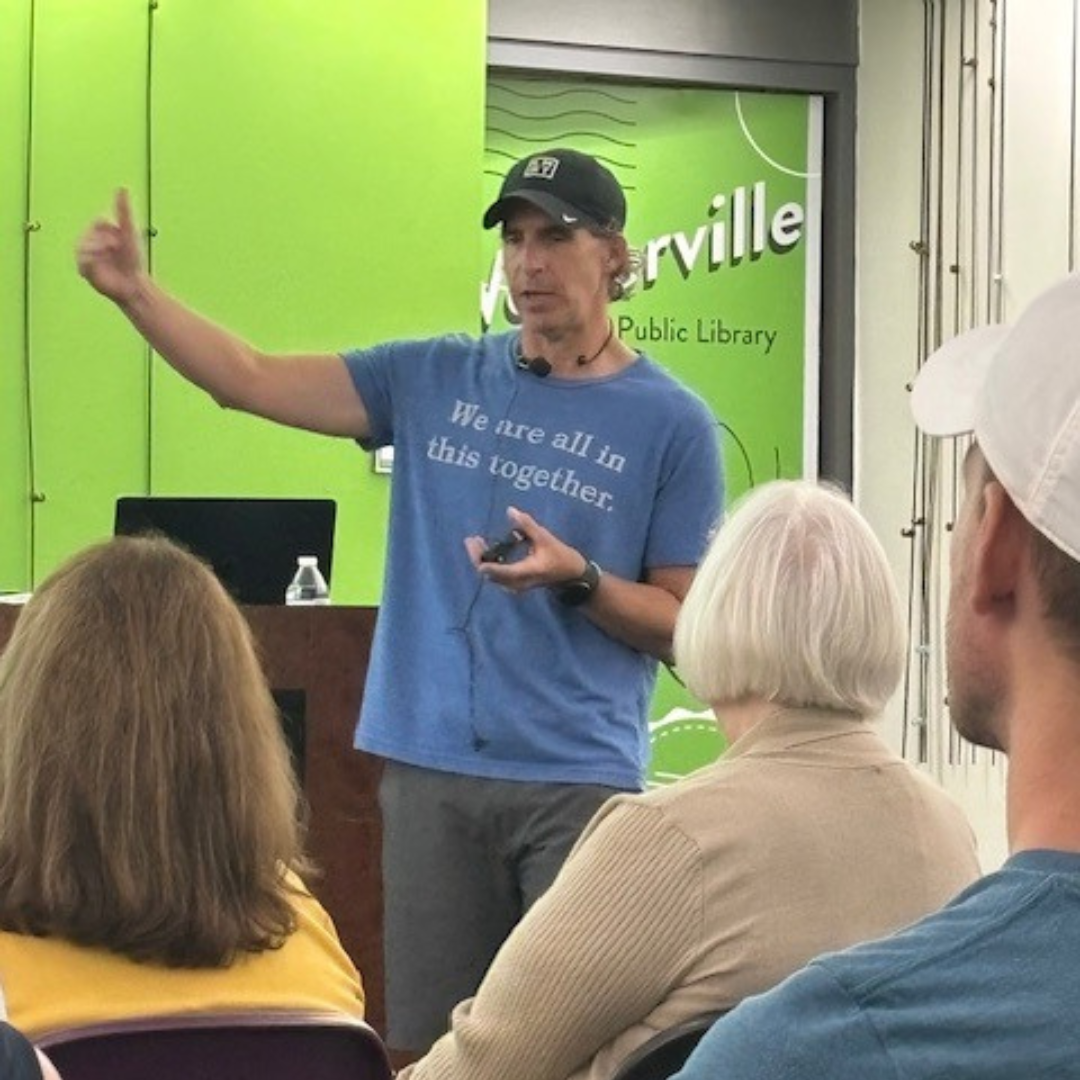
The first Read with a Doc program in June was well received, with dozens of attendees, questions, and active conversation.
Dr. David Sabgir, who founded the successful Walk with a Doc program, launched the new program with his first session at the Westerville Public Library on June 29 in collaboration with the Columbus Medical Association Alliance and the AMA Alliance. Dr. Sabgir discussed tools for living longer and better and the book, “Outlive: The Science & Art of Longevity,” by Peter Attia, MD. You can view the slides here.
Dr. Sabgir will return to the Westerville Public Library on July 27 with a focus on the power of social connection and the book, “The Connection Cure,” by Julia Holtz. Find more information and register here.
Walk with a Doc, CMA & Affiliates, and the AMA Alliance plan to expand to other libraries. They are always looking for physicians to participate in Read with a Doc and Walk with a Doc. Find out more information and get involve here.
Tags:
Read with a Doc
Walk with a Doc
Permalink
| Comments (0)
|
|

 Blog Home
 All Blogs
 RSS
RSS