CMA and Affiliates
Blog Home All Blogs
Blogs from the CMA and our Affiliate Organizations (Columbus Medical Association Foundation; Physicians CareConnection; Physicians Leadership Academy; COTS and Made for Medicine)


Search all posts for:   


Top tags: CMA Foundation  COTS  Made for Medicine  Member Spotlight  PCC  Partner Story  PLA  Sedgwick  Youth Advisory Council  Walk with a Doc  MagMutual  PCC Center for Optimal Health  Physicians Leadership Academy  Read with a Doc  Women in Medicine  Board of Directors  Emergency Preparedness  Member Benefit  Physicians CareConnection  Advocacy  Board Spotlight  CMA Practice Managers Group  CMF Foundation  Doc to Doc  Independent Practice  Medical Students  Mental Health  New Member  Sponsor Spotlight  Volunteer Spotlight 

A Message from Our Sponsor: Managing Patient Bankruptcies: Protect Your Practice from Collection Pitfalls

Posted By Columbus Medical Association - CMA, Tuesday, August 5, 2025

Patients filing for bankruptcy can significantly disrupt a healthcare practice’s usual billing and collections processes. Effectively managing these situations is crucial yet it’s often an overlooked aspect of practice management. By understanding the legal requirements and establishing clear procedures, medical practices can avoid legal pitfalls and preserve patient trust.

Monitor Bankruptcy Notifications

When a patient files for bankruptcy, the court issues a notice. It’s essential for healthcare practices to monitor these notifications, as continued collection efforts on a debt included in bankruptcy can lead to legal complications. 

Comply with the FDCPA

 The Fair Debt Collection Practices Act (FDCPA) establishes standards that prohibit harassment and ensure fairness in debt collection practices. Physicians and practice managers must adhere to its provisions when collecting debts, especially regarding patients in bankruptcy.

Bankruptcy Types and Their Impact on Medical Bills

Understanding the different types of bankruptcy can help healthcare providers and administrators manage patient debts effectively.

  • Chapter 7 Bankruptcy (liquidation): Under Chapter 7, a patient’s assets are liquidated to settle debts, with certain exemptions. Medical bills are categorized as unsecured debt, the last in line for repayment. Medical practices should expect to recover little or no payment and the unpaid balance will need to be written off if it is included in the discharge.
  • Chapter 13 Bankruptcy (reorganization/debt repayment plan): Chapter 13 allows patients to reorganize their debts under a court-supervised repayment plan that typically occurs over three to five years. Medical debts may be included in this plan, which can lead to partial payment over time. Providers must work with the bankruptcy trustee, comply with the plan and suspend collection efforts once Chapter 13 is filed until the court decides how debts will be handled.
  • Chapter 11 Bankruptcy (Business Reorganization): While primarily for businesses, high-net-worth individuals can sometimes use Chapter 11 for personal debt reorganization. Medical bills may be restructured, allowing for partial payment over time. Similar to Chapter 13, the healthcare provider must follow the court’s reorganization plan and accept incremental payments, if available.

Effective Communication and Documentation

Good communication and documentation can help to prevent misunderstandings and legal conflicts and maintain patient trust. When a patient informs a practice about filing for bankruptcy, it’s essential to secure written confirmation and record this information in the patient records. Any further collection efforts on the account should cease. 

If a patient verbally claims to have filed for bankruptcy, request documentation like a case number or court notice and verify this information through public bankruptcy records. Temporarily suspending collections while awaiting confirmation is a good practice to avoid violating the automatic stay.

Establish Internal Policies for Handling Bankrupt Accounts

To manage patient bankruptcies effectively, it’s vital for practices to create clear policies and ensure that bills do not get sent to patients going through bankruptcy. 

Any termination of a physician-patient relationship should be well documented following proper protocols, such as providing written notice and sufficient time for the patient to secure alternative care and ensuring emergency care is not disrupted. Providers should avoid discharging a patient solely due to a bankruptcy filing and instead base the decision on broader payment challenges.
Seek Legal Guidance
To stay compliant with bankruptcy laws and FDCPA guidelines, healthcare practices may benefit from consulting with legal counsel. An attorney with experience in bankruptcy and debt collection can provide tailored guidance, reducing the risk of costly errors. Having legal support also ensures that staff have reliable resources to answer questions about handling bankrupt accounts.

Consequences of Noncompliance

Failing to manage patient bankruptcies correctly can have serious ramifications for a healthcare practice, including legal penalties, reputational damage, financial losses and loss of patient trust.

Final Thoughts

Proactively managing patient bankruptcies by establishing clear policies, staying compliant with legal standards and educating staff can help healthcare practices avoid costly mistakes. By understanding bankruptcy procedures and communicating effectively with patients, providers can maintain strong patient relationships while protecting their practice’s financial stability.

MagMutual provides expert resources and guidance to help healthcare professionals navigate these challenges with confidence. Visit our full library of Healthcare Insights for additional support.

Disclaimer: The information provided in this article does not constitute legal, medical or any other professional advice. No attorney-client relationship is created and you should not act or refrain from acting on the basis of any content included in this article without seeking legal or other professional advice.


Tags:  MagMutual  Partner Story 

PermalinkComments (0)
 

Columbus Medical Association Foundation Announces New Marc L. Parnes, MD Service Award

Posted By Columbus Medical Association - CMA, Tuesday, August 5, 2025

The Columbus Medical Association Foundation is proud to announce the creation of the Marc L. Parnes, MD Service Award, honoring the exceptional leadership and unwavering commitment of Dr. Marc Parnes to the Columbus Medical Association, CMA Foundation, and the affiliate organizations. 


Dr. Parnes has served faithfully for more than 15 years as president and board member of the CMA Foundation, leaving a legacy of integrity, compassion, and purpose-driven service. In recognition of his outstanding contributions, the CMA Foundation will present the inaugural award during “Muse,” CMA’s annual gala celebration on October 23, 2025. 

“We are deeply grateful for Dr. Parnes’ leadership, remarkable service, and commitment to the Foundation,” says Paula Cosby, Director, CMA Foundation. “His contributions have left a lasting impact, and we are honored to celebrate his legacy by establishing this award in his name.” 

The Marc L. Parnes, MD Service Award will be presented annually to a volunteer whose service exemplifies the mission and vision of the CMA, CMA Foundation, and its affiliate organizations. Nominees should be individuals whose efforts have improved the functioning of these organizations, advanced physician well-being in Central Ohio, and/or positively impacted the health of the broader community. 


For additional information, contact Paula Cosby at pcosby@cmafohio.org or (614) 240-7410. 

Tags:  CMA Foundation 

PermalinkComments (0)
 

Board Spotlight: Deepak Sudheendra, MD

Posted By Administration, Thursday, July 24, 2025

Deepak Sudheendra, MD, MHCI, RPVI, FSIR
Founder & Medical Director, 360 Vascular Institute

What inspired you to pursue a career in medicine?
As a child, many Saturdays were spent making rounds with my father, a cardiothoracic surgeon. I remember how he would often hold a patient’s hand while talking with them. It brought them comfort, and it left a lasting impression on me. I was drawn to the deep connection he had with his patients and the genuine love he had for his work. Seeing the impact that he made in their lives inspired me to pursue a path where I could do the same.

What brought you and your family to Columbus?
Initially, my wife, Dr. Preeti Sudheendra, who is a renowned medical breast oncologist, was recruited to The James Cancer Center. We decided that Columbus would be a great place to raise our family and be close to extended family, as I’m an Ohio native.

After a long academic career, why did you choose to open your own private practice?
During my tenure as faculty at the Hospital of the University of Pennsylvania, I founded and directed the DVT and Complex Venous Disease Program, which grew to become one of the largest referral centers of its kind in the country — serving patients from across the United States and abroad. That experience reinforced the importance of delivering advanced vascular care while prioritizing conservative management and continuity of care.

I sought to replicate this progressive model in Columbus but with the added autonomy to tailor my practice around a more patient-centered philosophy. Interventional Radiology (IR) has traditionally been viewed as more procedural and less involved in ongoing patient care. I wanted to challenge that notion by building an independent office-based practice where IR could lead longitudinal care and deliver comprehensive treatment under one roof.

What are your areas of clinical interest?
My expertise is in complex arterial and venous disease. In addition to treating advanced peripheral arterial disease, I have a niche in managing DVT, post-thrombotic syndrome, pelvic venous insufficiency, and chronic venous insufficiency. I also perform minimally invasive treatments such as uterine artery embolization for fibroids and geniculate artery embolization for chronic knee pain due to osteoarthritis.

Tell us about your new practice.
Located across from Dublin Methodist Hospital, I launched 360 Vascular Institute in late 2023 with the goal of redefining how vascular care is delivered in Ohio. As the state’s first office-based interventional radiology (IR) practice, we offer physician-led care, comprehensive diagnosis and treatment under one roof, and a nearly 5,000-square-foot office equipped with consultation rooms, an ultrasound vascular lab, preop/recovery suites, and a nationally accredited, state-of-the-art angiography suite.

We accept all commercial insurances, Medicare, and Medicaid. Approximately one-third of our patients travel from across the United States and abroad to receive care in Dublin. We are also proud to serve as a trusted resource for referring physicians — offering direct access to an IR colleague for timely consultations and collaboration.

There are three key elements that distinguish our practice. First, my clinical background: before changing my specialty to IR, I completed nearly a full general surgery residency and spent my early attending years practicing both IR and surgical critical care. This rare skillset combination allows me to take a comprehensive, hands-on approach to managing patients safely. Second, we place a strong emphasis on patient education. We believe that when patients and their families understand their condition and treatment plan, outcomes improve dramatically. Finally, I’ve had the privilege of assembling an exceptional team, affectionately known as our “Dream Team”. Each of them chose to be a part of this mission, and together, they bring not only clinical excellence and compassion but also an unwavering commitment to transforming how vascular care is delivered in the region.

To learn more about our services or explore educational resources, visit www.360Vascular.com. I’m always happy to connect and can be reached at dr.sudi@360vascular.com.

Favorite restaurant in Columbus?
There’s no shortage of great food in town, but Napa Kitchen is one of my favorites.

How do you like to spend your free time?
I’m lucky to have an amazing wife, two wonderful kids (ages 8 and 11), and our rambunctious puppy, Skipper. We love spending time together and traveling whenever we get the chance.

What’s the best piece of advice you've received?
Persistence turns closed doors into open ones. Keep moving forward, even when the answer is no.

This post has not been tagged.

PermalinkComments (0)
 

A message from our Sponsor WesBanco: 5 Perks of Commercial Real Estate Ownership

Posted By CMA, Thursday, July 24, 2025

5 Perks of Commercial Real Estate Ownership

One of the biggest decisions you’ll face as a small business owner is whether to buy or lease your space.

If your need for space is evolving, you should familiarize yourself with the various pros and cons of each option. Here, we’ll dive into five key advantages of owning commercial real estate:

1. Turn an Expense Into an Asset

Virtually nothing in business comes without a cost, so it’s a bit too simplistic to say that paying rent is “throwing money away” – but it certainly doesn’t offer the long-term investment potential of buying your own storefront, office space, or industrial facility.

Over time, your monthly mortgage payments will build substantial equity that you can convert into cash or borrow against with an affordable term loan or line of credit. And while investments never come with guarantees, commercial real estate has historically delivered very strong returns. Depending on the location, the economic conditions of the moment, and other factors, commercial properties have a ROI of between 6% and 12%. That’s greater than many major equity indices. The purchase of a single-family home may yield an ROI of 1% to 4%.

2. Add a Revenue Stream

In most cases, in order to qualify for a basic commercial mortgage, a business has to occupy at least 51% of a property it buys. But that leaves up to 49% of your square footage that you can rent out to establish a secondary source of income.

If you need office space, you could consider purchasing a multistory building and leasing out the ground level to a retail business or eatery that would benefit from the accessibility and visibility. If you need a production facility and expect to grow your operations down the road, you might be able to lease extra space to smaller startups until you need it yourself.

3. Enhance Your Rental Income

Even if renting out a portion of your square footage is already a key element of your growth plan, you may not have considered all the ways you could maximize and diversify this type of income flow.

Instead of leasing office space to a single business, you could lease to hybrid professionals looking for a dedicated work station with shared amenities. Renting out event and meeting space can also bring in extra cash on an ad hoc or ongoing basis. Charging your tenants for premium features like parking, storage, and cleaning services may be another option. And if your property is in a high-traffic location, consider selling outdoor ad space.

4. Enjoy New Tax Benefits

If you lease your space, you can usually deduct your monthly rent payment as a business expense – but owning your own property can provide significant advantages at tax time, too.

In nearly all cases, property owners can write off mortgage interest – and mortgage payments are interest-heavy at first, so this is a front-loaded benefit. Additionally, while real estate tends to appreciate in value over time, the IRS allows owners to depreciate commercial properties over a set period (usually 39 years but sometimes less). While the IRS may recapture these deductions if you later sell the property at a gain, depreciation can offer significant year-to-year savings. Consult a trusted tax advisor.

5. Enjoy More Stability and Control

Some of the most important benefits of property ownership are the hardest to quantify in dollars and cents.

For starters, you may have greater peace of mind knowing that you won’t have to deal with rent hikes or having to relocate unexpectedly. You may also have far greater latitude when it comes to the use of your space. You won’t be up against landlord-imposed restrictions, and you can remodel the space to suit your needs (and retain the value of those capital improvements). Plus, you shouldn’t have to put up with problematic co-occupants – you can have the place all to yourself or choose what type of tenants you lease to.

This post has not been tagged.

PermalinkComments (0)
 

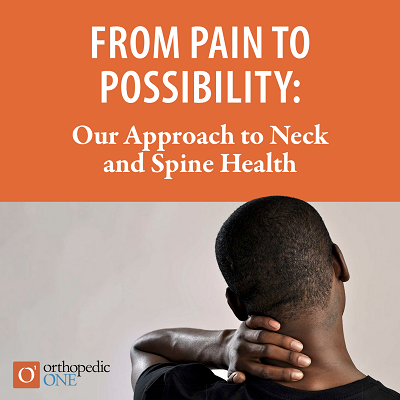
A Message from our Sponsor: From Pain to Possibility - Our Approach to Neck and Spine Health

Posted By Administration, Thursday, July 24, 2025

From Pain to Possibility: Our Approach to Neck and Spine Health

Neck and spine pain can be debilitating, disrupting everyday routines, keeping you from the activities you love, and at times, making it hard to even get out of bed. At Orthopedic ONE, our objective is to help you move forward, comfortably, confidently, and with a care plan that’s built around you.

A Personalized Evaluation

When a patient comes to Orthopedic ONE with spine or neck pain, the goal is simple: identify the root cause and provide the least invasive, most effective treatment plan possible. That begins with listening.

“You should expect to have someone learn more about you and the history of the pain and how it affects your everyday life,” shares Dr. Evan Berlin, a fellowship-trained physical medicine and rehabilitation physician. A typical evaluation includes a discussion, physical exam, and X-rays to rule out urgent concerns like fractures. From there, the care team outlines potential next steps.

Dr. Milan Herceg, a fellowship-trained spine surgeon, echoes that philosophy: “We want to help people return to function and get the optimal results to return to their activities of enjoyment with the least invasive treatment options available.”

Common Causes, Individualized Care

While neck and spine injuries can occur suddenly, the majority of issues are degenerative in nature and build up gradually over time. Most patients suffer from one of three common issues: discogenic pain, arthritis, or a pinched nerve (also known as radiculopathy).

“Discogenic pain comes from pressure on the discs, often from bending forward and twisting,” explains Dr. Berlin. “Arthritis is more of a wear-and-tear disease. And a pinched nerve happens when a disc herniation irritates a nearby nerve.” Additionally, contributing factors like poor posture, stress, and weak core muscles can exacerbate these conditions.

The key to successful treatment? Understanding which of these conditions, or other stressors, is at play, and creating a care plan tailored to the patient’s needs.

Exploring Treatment Options

No two patients are the same, and no two treatment plans should be either. That’s why we begin with a full review of every possible path forward. “There are five treatment categories we talk about with every patient,” says Dr. Berlin. “Doing nothing, physical therapy, medications, injections, and surgery.”

While “doing nothing” may be appropriate for very mild or resolving cases, most patients begin with conservative treatments like physical therapy. “Physical therapy is the ultimate solution to most, if not all, of these problems,” Dr. Berlin notes. Strengthening the core, especially muscles around the spine, abdomen, and hips, can help stabilize the spine and reduce pressure on sensitive joints and discs.

In some cases, medications such as anti-inflammatories or nerve-calming prescriptions are used to reduce pain and support healing. When additional intervention is needed, our team may recommend image-guided injections, ranging from epidurals to nerve blocks or ablations, designed to target pain at its source. “The key is choosing the right injection for the right patient, at the right time,” adds Dr. Berlin.

When Surgery Becomes the Right Step

While spine surgery is often seen as a last resort, Dr. Herceg emphasizes that for certain patients, especially those with spinal instability or severe nerve compression, it can be the most effective way to restore function and relieve pain.

“The vast majority of patients can be treated non-surgically,” says Dr. Herceg, “but when surgery is the right step, it’s important that patients are fully informed, prepared, and involved in every part of the decision.” Furthermore, what sets Orthopedic ONE apart is the comprehensive approach and strict criteria for surgical intervention. “We’ve developed an algorithm that starts with observation and physical therapy, then progresses, only if necessary, to injections or surgery.” The right preoperative course leads to better postoperative outcomes.

For patients who do move forward with surgery, our team offers minimally invasive options whenever possible, supported by precise imaging and targeted techniques. “We’re seeing improved recovery times and better long-term outcomes,” Dr. Herceg explains. “When a patient is the right candidate, surgery can restore function and dramatically improve quality of life.”

Stephanie’s Story: A Return to Joy

Stephanie, a patient at Orthopedic ONE, is a powerful example of how the right diagnosis and treatment plan can restore not just physical health, but quality of life.

Stephanie was in peak physical condition when her back pain began. Active, strong, and living a healthy lifestyle, she had no idea what was wrong. What followed were years of frustration, physical therapy, injections, and treatments that failed to provide answers or relief.

Eventually, Stephanie turned to Orthopedic ONE. Imaging revealed significant spinal instability, something that previous evaluations had missed. Her care team determined that surgery would be the best option for long-term relief.

Still, she was nervous. “I had always thought nobody only has one back surgery. I’m going to have another one… or this was going to be it for the rest of my life.” Her perspective began to shift thanks to the support and guidance she received from Dr. Herceg and her care team. “They just radiated empathy and warmth and comfort and knowledge to patients… I talked to them about my story, the fact that my wife and I were getting ready to get married a month from now—what was this going to be like? What was going to happen to me afterward?”

Stephanie committed to the process, physically preparing for surgery, emotionally bracing for change, and trusting her care team. That belief paid off. “Things could not have worked better, and a month later, on September 27th, I was dancing at my wedding in heels.”

Today, Stephanie is more than recovered; she’s thriving. “Because of Orthopedic ONE and the care that I’ve received here, I’m not only able to return to my physical passions and pursuits, but I’m able to be the kind of human being that I want to be… You can’t do that when you’re in pain.”

Why Choose Orthopedic One

At Orthopedic ONE, comprehensive care means more than offering services under one roof. It means your entire care team, doctors, therapists, imaging specialists, and surgical staff, are collaborating, communicating, and coordinating every detail of your care. As Dr. Herceg puts it, “our patients and our surgical team have the same common goals, understandings, and expectations, all allowing for better outcomes.”

Furthermore, “there’s not a large wait for a lot of these things,” Dr. Berlin points out. “Here at Orthopedic ONE, we sometimes get MRIs the same day, and physical therapy is scheduled within a week or two across our more than 11 therapy sites. Being able to do that at all of our locations, I think, is unparalleled.”

No matter where you are in your journey, you remain in control. “We lay out the options,” says Dr. Berlin, “but the patient always decides what’s right for them.”

Your Next Chapter Starts Here

Neck and spine issues are complex, but your care doesn’t have to be. Whether you’re dealing with a new ache or years of discomfort, our team at Orthopedic ONE is ready to meet you where you are and help you move forward.

“Our goal,” says Dr. Herceg, “is to help you return to the life you love, with the least invasive, most effective treatment available.” Let us help you move from pain to possibility.

This post has not been tagged.

Permalink
 
Page 16 of 27
 |<   <<   <  11  |  12  |  13  |  14  |  15  |  16  |  17  |  18  |  19  |  20  |  21  >   >>   >|